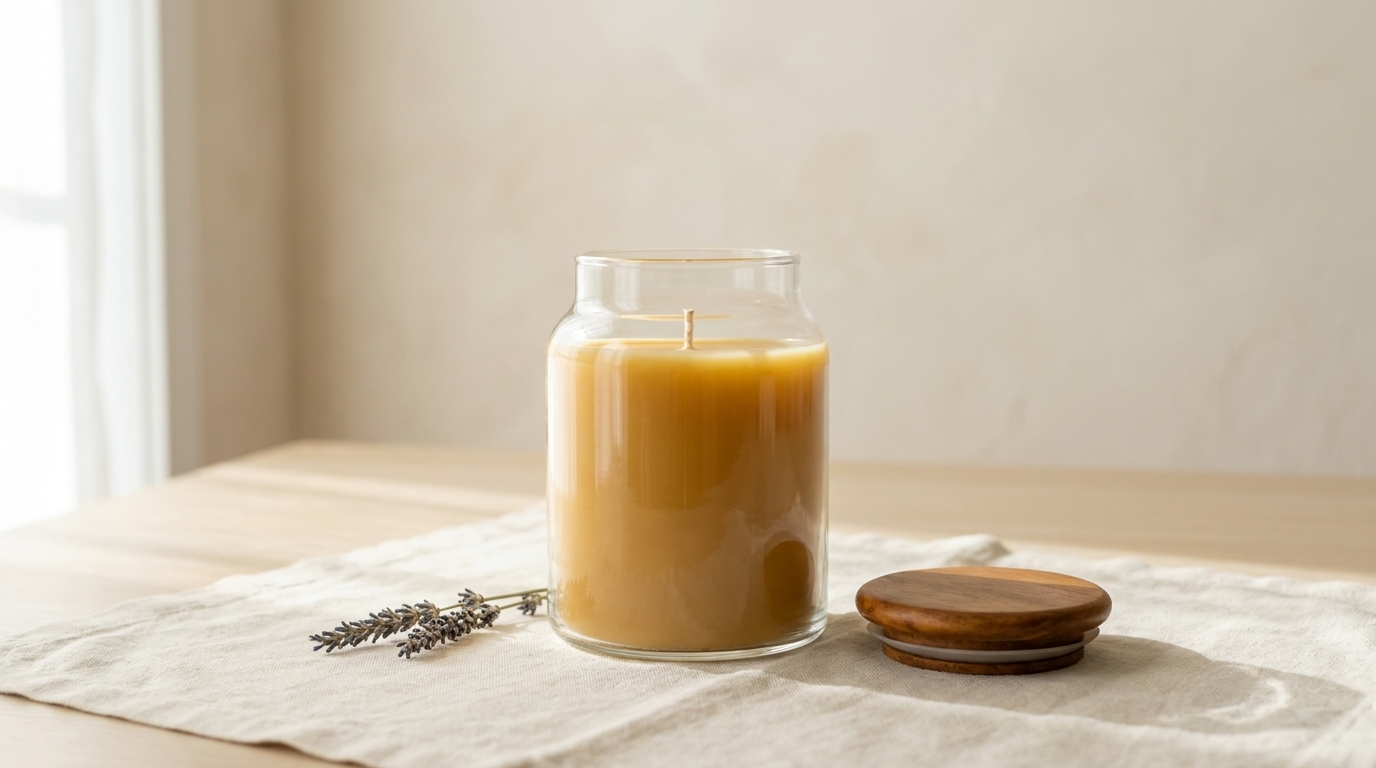
A steadying candle for the days you have to be kind to yourself. Lavender takes the edge off, lemon balm softens what's underneath, rose holds what's left.
Free US shipping over $50 · Handmade in Bogalusa, Louisiana · Usually ships within 3 business days (poured to order)
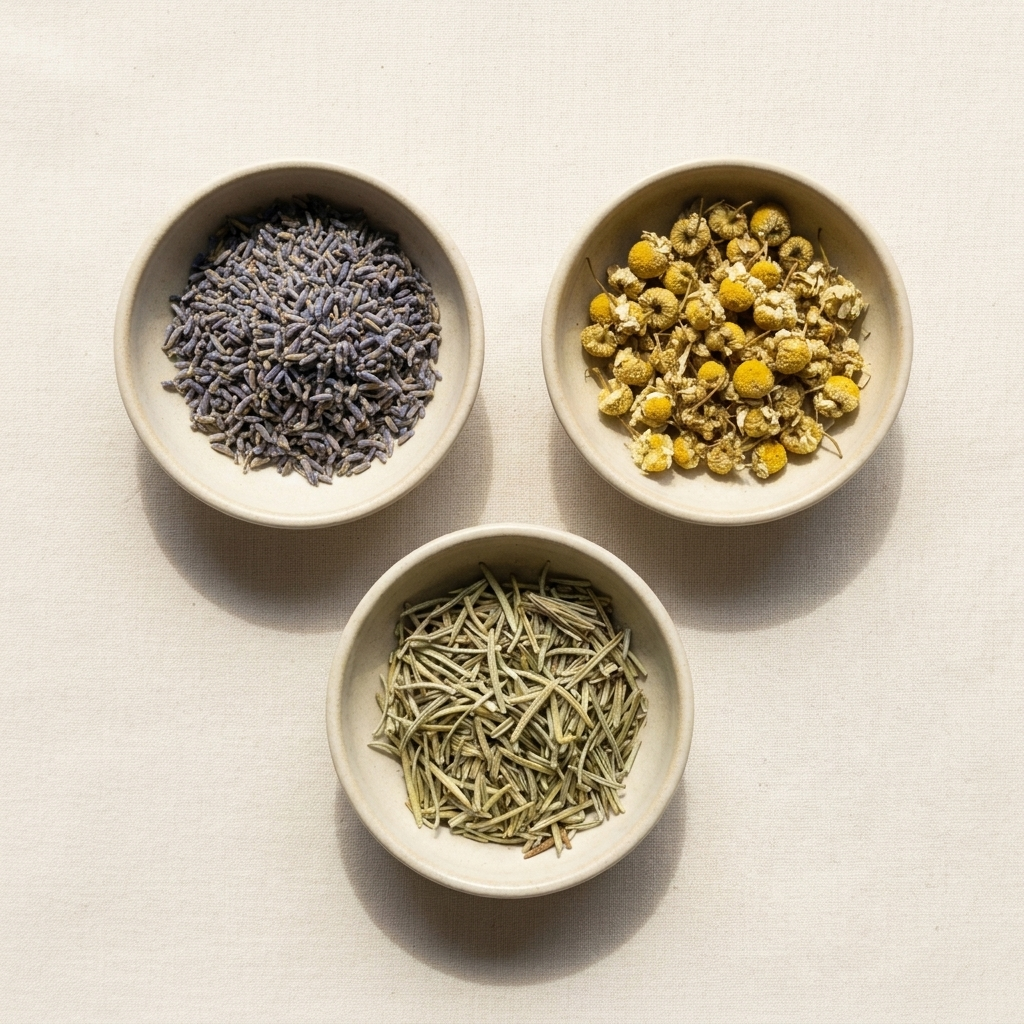
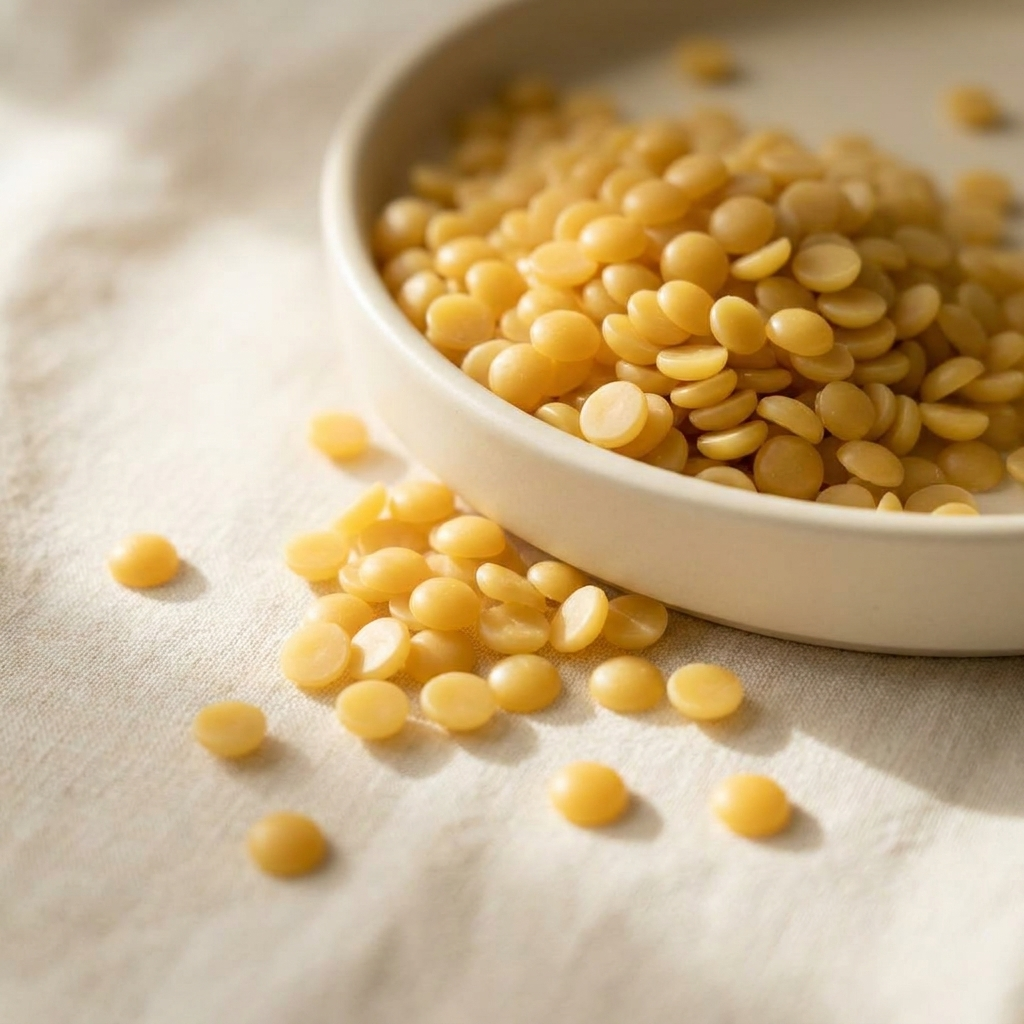
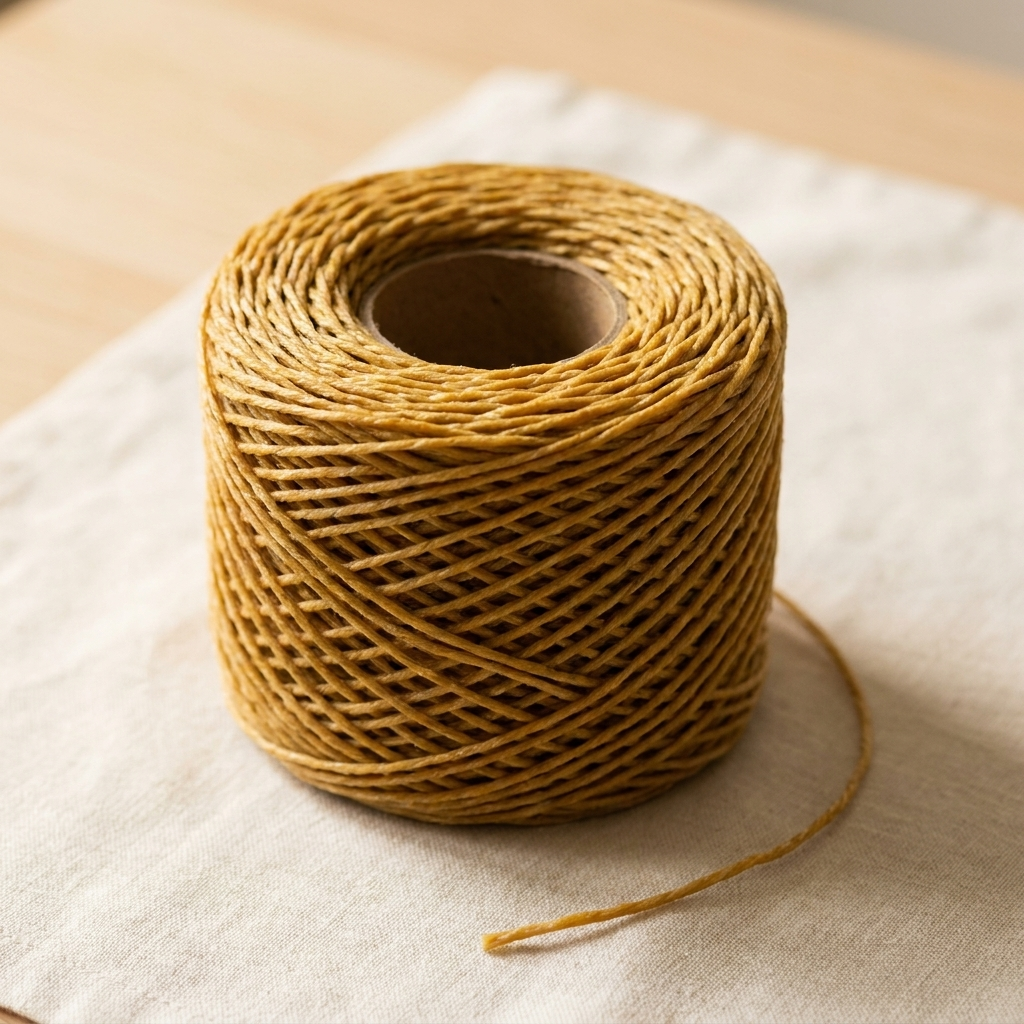
100% pure beeswax. Organic dried lavender, lemon balm, and rose — each infused separately, then strained. A beeswax-coated hemp wick. That's the whole ingredient list.
Beeswax burns cleaner than paraffin or soy, without the petroleum soot that darkens lampshades over time. The scent is soft — these are herbal notes, not fragrance-oil notes. The room smells like lavender and lemon-balm tea, not like a candle shop.
Days when you need to be gentle with yourself. Grief. A long exhale. Bath with the door closed. The quiet part of the morning. Whatever you bring to it.
Nothing below is required reading. If you already know what you want, you have it. If you like understanding what's in your hands, here's the rest.
Three plants that have been used together — sometimes all three, sometimes two of the three — across European folk herbalism and monastic herb gardens for centuries. Every one of them has modern clinical research behind the old use, which is a rarer coincidence than it sounds.
Lavender — Lavandula angustifolia. Studied in modern clinical research for its measurable effect on anxiety and sleep. Grown in monastic herb gardens across Europe, including Hildegard of Bingen's in the 12th century, where it was used for headaches and for the unwell spirit. The quieting flower.
Lemon Balm — Melissa officinalis. Named from the Greek melissa, "honeybee," because bees love it. Called a "sovereign remedy" for the heart by Paracelsus in the 16th century. Used in modern clinical research on mild anxiety and mood. The softening herb — it takes the sharpness out of grief.
Rose — Rosa spp. The oldest cultivated flower in the Western tradition. Used in European pharmacopeia, in Middle Eastern medicine, in Indian traditional medicine, all the way back. Associated with love in every tradition it touches, which is rare enough to notice. Here it steadies the blend — keeps the tenderness from tipping into sadness.
Each of the three herbs was infused into the beeswax separately, at the temperature that particular plant tolerates best. The specific temperatures aren't guessed at — they come from essential-oil degradation research and my own batch logs, and get rechecked every time a new lot of an herb comes in. Delicate herbs like lemon balm go in cooler; hardier ones like lavender take more heat; rose sits in between. Each infusion is held at temperature long enough to draw the compounds into the wax without scorching them, then strained so no plant matter remains in the finished candle.
The three infusions are then blended in the proportion the blend calls for — in this case, more lavender than lemon balm, less rose than either, because the rose's job here is to anchor, not to lead. Poured into the vessel while the wax is still workable.
Lavender from my primary co-op supplier in Iowa. Lemon balm and rose from organic fair-trade growers I've settled on after trying several. I know who grew each plant, how it was dried, and how recently it left the farm.
Many people light these candles without ceremony, and that's the whole point — the candle is good company either way. If you'd like something more: the education can sit alongside the candle, there to support whatever goal you brought to it.
At checkout you can add, free of charge, one of two optional herb-education cards. Same information, curated differently to match how you already think:
The plants in this blend through the lens of modern clinical research and documented traditional uses — what the studies have actually shown for lavender on anxiety and sleep, for lemon balm on mood and calm, for rose on emotional regulation. A grounded summary, no religious framing. A short reflection for the moment of lighting.
The same plants, placed in the contemplative traditions where they have lived for centuries: lavender in monastic herb gardens, lemon balm in medieval prayer practice, rose in devotional writing across multiple faiths. A short, non-denominational reading for the moment of lighting, written to fit anyone holding a faith of their own.
Pick one, the other, both, or neither. Entirely opt-in. The candle is the same candle.
Tender Heart was the first blend I made that wasn't for a customer request or a shop-stocking reason. I made it because I was having a hard week, and I wanted a candle that was doing something specific — not "relaxation" in the soft-sell sense, but the very particular work of steadying a heart that's already cracked open a little.
It stayed in the catalog because other people kept telling me they needed it too. I don't think of it as a grief candle exactly. But it's the one I light when I am trying to be kind to myself.
— Debra